About Mexico
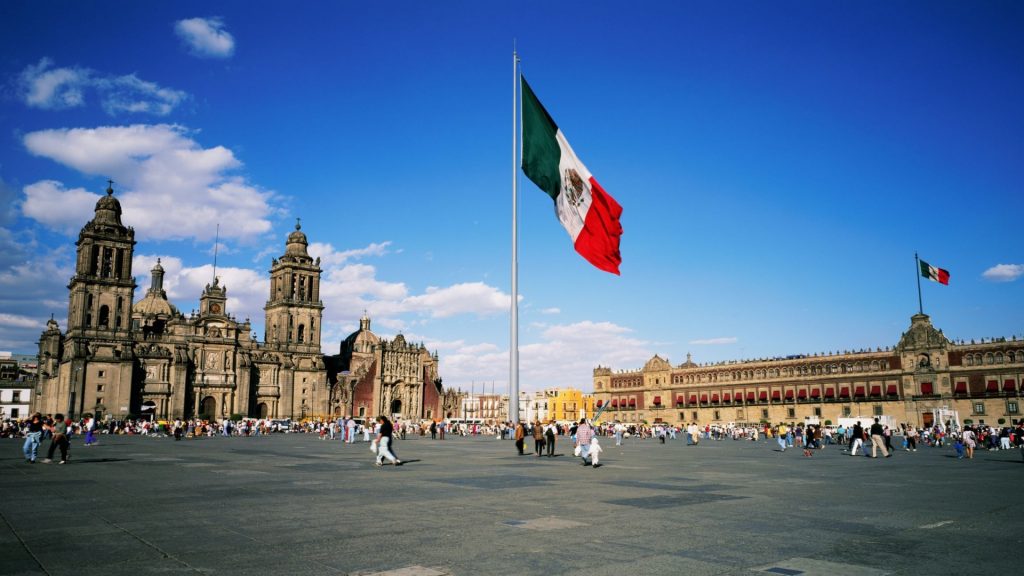
Mexico
When the Spanish conquistadores arrived in Mexico in 1519, they came across natives of the Aztec civilization that spanned thousands of years (as evidenced by the presence of pyramids & statues dedicated to their gods). Two years later (1521), the Spaniards conquered the Aztec capital of Tenochtitlan – which became the Spanish capital Mexico City (to later become the capital of New Spain). The presence of gold in Mexico made that country (along with Peru) Spain’s most relevant colonies, due to the Spanish monarch’s quest for the precious mineral.
Spain went through a series of political crises during the early 19th century, including French leader Napoleon’s conquest of the country for a time. These dilemmas helped kick off independence efforts within Spain’s Latin American colonies, resulting in the independence of many Central & South American countries, along with Mexico (which got its independence from Spain in 1821). The country of Mexico at that time included areas that were lost to the USA during the Mexican-American War (1846-1848) – including Texas, California, New Mexico, Colorado, Utah, Nevada and Arizona.
Afterwards, Mexico went through a series of regimes, along with the French invasion of the country in 1861 (which installed a member of European royalty — Archduke Ferdinand Maximilian of Austria, as Emperor Maximilian I of Mexico). The French occupation of Mexico ended in 1867 (at the request of the U.S. government – which ended its Civil War a couple of years earlier). To this day, Mexicans at home and abroad celebrate “Cinco de Mayo” (in commemoration of the Mexican Army’s military victory over the French during the early days of that occupation).
Mexico entered the history books again in the early 20th century when a wave of social change going through the country resulted in the Mexican Revolution, which ended a series of dictatorships and introduced a constitutional republic, along with some reforms. Legendary Mexican figures like Pancho Villa and Emiliano Zapata were among the fighters who brought about such changes in Mexico. In time, the political party PRI (Institutional Revolutionary Party) became the most power force in Mexican politics, with the country’s democratic institutions under its control for decades (from the 1930s until the 1990s).
Along with successful oil exploration efforts (with were controlled by the state-run petroleum company PEMEX), Mexican efforts to boost its economy by creating more jobs for its growing population were highlighted by that government negotiating the NAFTA (North American Free Trade Agreement) with the USA and Canada during the mid-1990s. That resulted in new levels of industrialization in Mexico (through the transfer of factory jobs from higher-wage USA to lower-wage Mexico).
Given Mexico’s expanded industrialization, one of its challenges has been to promote the country as a viable tourism destination, which is still a work in progress. While other Mexican tourist destinations have declined in popularity in recent times (such as Acapulco), Cancún (on Mexico’s Caribbean coast) has remained a popular destination among American and other international travelers (including college students). Cancún currently competes with other Caribbean destinations for such tourists, like Puerto Rico, Dominican Republic, the Bahamas, Jamaica, Miami, and even Cuba. Meanwhile, Mexico City, by virtue of its status as the nation’s capital, attracts a more diverse group of travelers: both international tourists, as well as businessmen. With 44 million international tourists a year visiting Mexico, the tourism sector is now 8.7% of the country’s GSP (Gross Domestic Product).